✨ New Arrivals Just Dropped!Explore


Betaine HCI Pepsin & Gentian Bitters
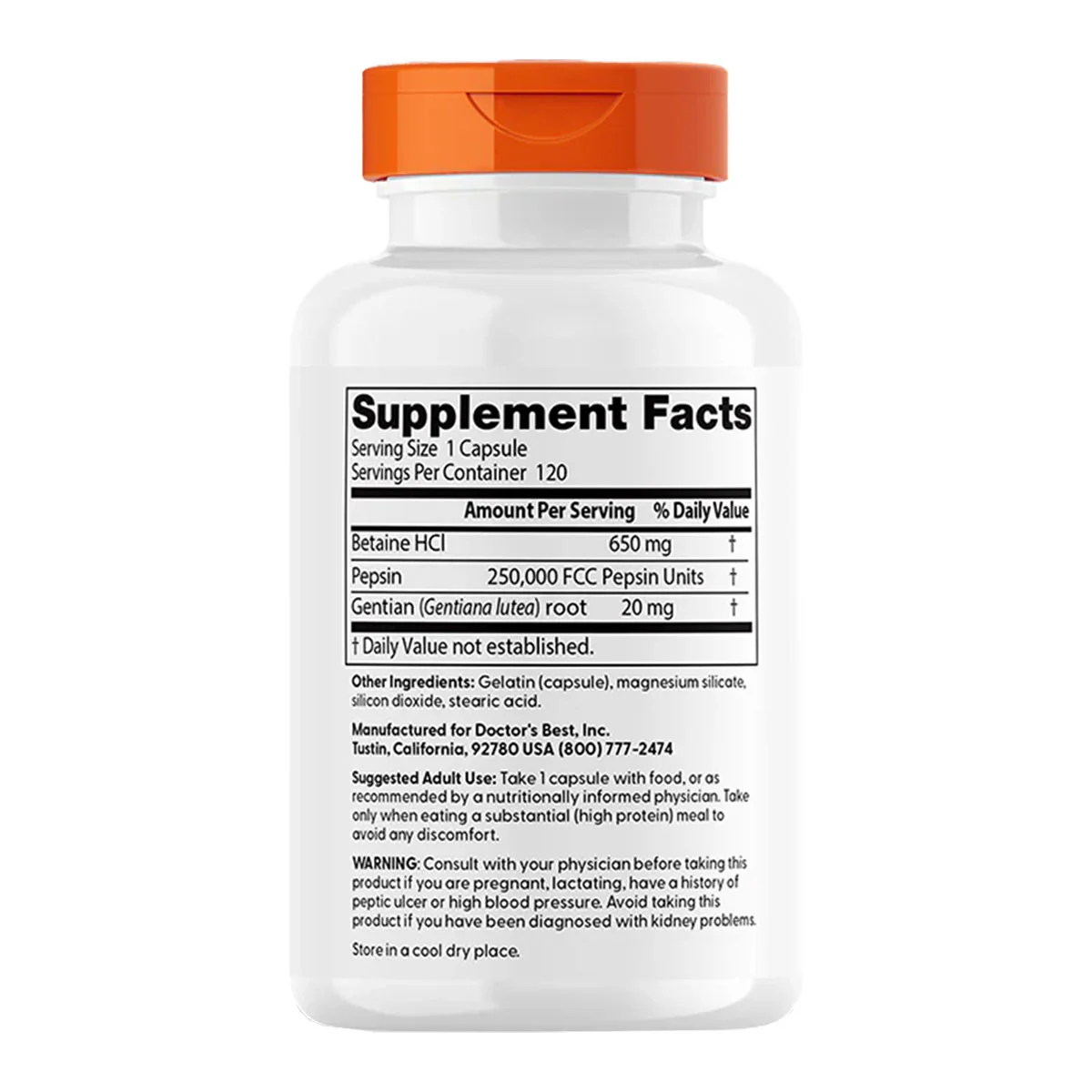
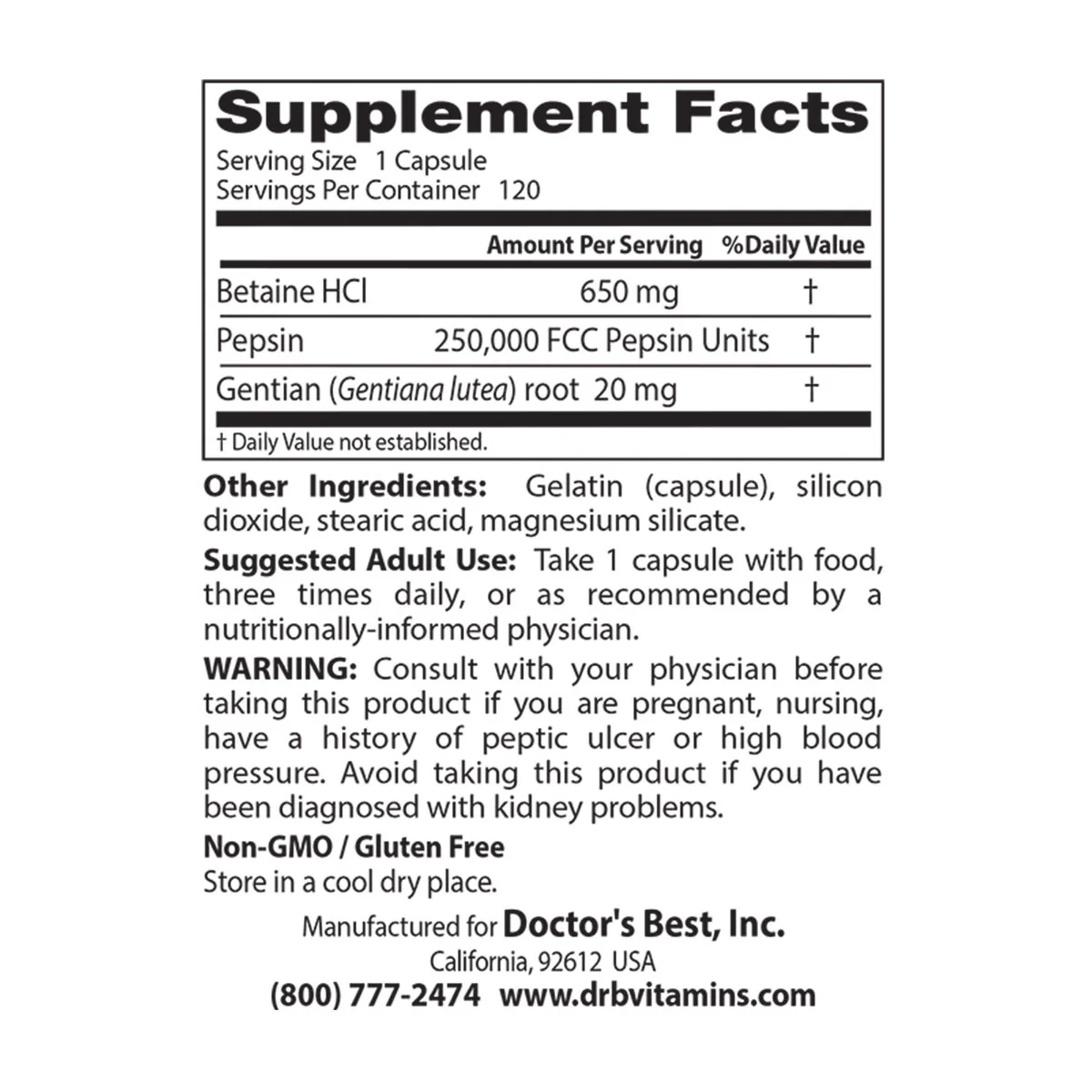
Doctors Best Betaine HCI Pepsin & Gentian Bitters contains a combination of Betaine HCI, Pepsin and Gentian to help support stomach acid production, digestive efficacy and to support digestive tract tone. Betaine HCl may support the stomach’s digestive capacity by supporting a lower gastric pH.
Pepsin is a protein-digesting enzyme made in the body. Pepsin is formed when pepsinogen, an inactive enzyme, mixes with stomach acid. The stomach acid converts pepsinogen into the active enzyme, pepsin. Gentian (Gentian lutea) is an herb used to support digestive capacity. Its bitter nature may help to support the body’s own production of digestive enzymes.
How does it work?
Betaine HCl is used to support the stomach’s own production of hydrochloric acid, (also known stomach acid). One of the functions of stomach acid is to break down food that enters the stomach into smaller particles, the acid is produced by the parietal cells of the stomach.
Betaine HCl has been shown to support a lower gastric pH which could potentially support in the absorption of nutrients if there is a lack of stomach acid. Gentian is an herb that is native to parts of Europe and Asia. The root has been traditionally used to support digestive function due in large part to its bitter constituents. Some traditional texts classify gentian as a bitter tonic and digestive stimulant. This is due to its ability to support the secretion of digestive enzymes. Gentian has been shown to support gastric secretion production, as well as support choleretic activity.
TAPS PP7049
$26.62
Betaine HCI Pepsin & Gentian Bitters—
$26.62
More Images
Betaine HCI Pepsin & Gentian Bitters
Doctors Best Betaine HCI Pepsin & Gentian Bitters contains a combination of Betaine HCI, Pepsin and Gentian to help support stomach acid production, digestive efficacy and to support digestive tract tone. Betaine HCl may support the stomach’s digestive capacity by supporting a lower gastric pH.
Pepsin is a protein-digesting enzyme made in the body. Pepsin is formed when pepsinogen, an inactive enzyme, mixes with stomach acid. The stomach acid converts pepsinogen into the active enzyme, pepsin. Gentian (Gentian lutea) is an herb used to support digestive capacity. Its bitter nature may help to support the body’s own production of digestive enzymes.
How does it work?
Betaine HCl is used to support the stomach’s own production of hydrochloric acid, (also known stomach acid). One of the functions of stomach acid is to break down food that enters the stomach into smaller particles, the acid is produced by the parietal cells of the stomach.
Betaine HCl has been shown to support a lower gastric pH which could potentially support in the absorption of nutrients if there is a lack of stomach acid. Gentian is an herb that is native to parts of Europe and Asia. The root has been traditionally used to support digestive function due in large part to its bitter constituents. Some traditional texts classify gentian as a bitter tonic and digestive stimulant. This is due to its ability to support the secretion of digestive enzymes. Gentian has been shown to support gastric secretion production, as well as support choleretic activity.
TAPS PP7049
Product Information
Product Information
Shipping & Returns
Shipping & Returns
Description
Doctors Best Betaine HCI Pepsin & Gentian Bitters contains a combination of Betaine HCI, Pepsin and Gentian to help support stomach acid production, digestive efficacy and to support digestive tract tone. Betaine HCl may support the stomach’s digestive capacity by supporting a lower gastric pH.
Pepsin is a protein-digesting enzyme made in the body. Pepsin is formed when pepsinogen, an inactive enzyme, mixes with stomach acid. The stomach acid converts pepsinogen into the active enzyme, pepsin. Gentian (Gentian lutea) is an herb used to support digestive capacity. Its bitter nature may help to support the body’s own production of digestive enzymes.
How does it work?
Betaine HCl is used to support the stomach’s own production of hydrochloric acid, (also known stomach acid). One of the functions of stomach acid is to break down food that enters the stomach into smaller particles, the acid is produced by the parietal cells of the stomach.
Betaine HCl has been shown to support a lower gastric pH which could potentially support in the absorption of nutrients if there is a lack of stomach acid. Gentian is an herb that is native to parts of Europe and Asia. The root has been traditionally used to support digestive function due in large part to its bitter constituents. Some traditional texts classify gentian as a bitter tonic and digestive stimulant. This is due to its ability to support the secretion of digestive enzymes. Gentian has been shown to support gastric secretion production, as well as support choleretic activity.
TAPS PP7049